
The dust has settled on the 2026 season and ahead of us lies the most important offseason in baseball history, where we’re soon to be in a bleak holding pattern to see what becomes of this game and just how long we may be without MLB.
We’re a little under four weeks until we begin to even really scratch the surface on finding those answers, so until then, friends of the Comic Book Clique, it's the Weekly MLB Report!
It’s been some editions since I threw up an Immaculate Grid so, here you go!
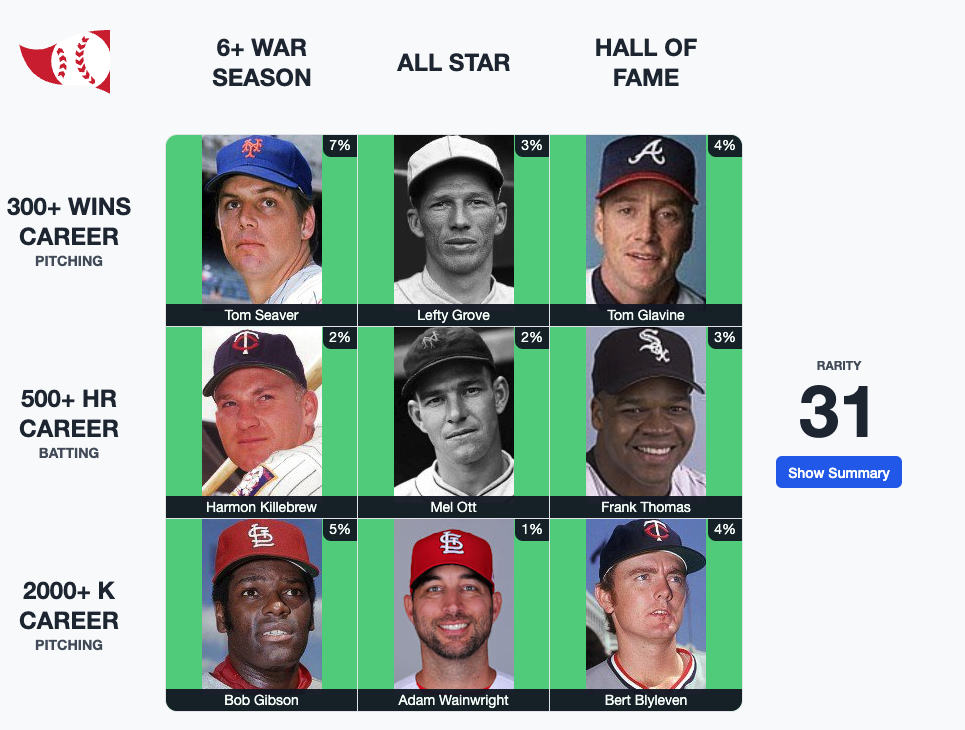
Weekend grids are less zany than the weekday grids and usually focus on milestones or place of birth for topics. It makes getting really low percentage answers harder to get, so we sit at 31. If only I could’ve remembered Pud Galvin or Bobo Newsom.
The impending lockout is on the mind of all baseball fans and this week and news about MLB’s proposals about both a salary cap and salary floor dropped:
In MLB’s second proposal to the Union, they offered a salary floor of $180.2 million and salary cap of $258.2 million. Both of those numbers are up from the original floor of $171.2 million and original cap of $245.3 million proposed back in May. The new numbers could still change as they are projections based on potential 2027 revenue, moving away from their also originally proposed fixed number model.
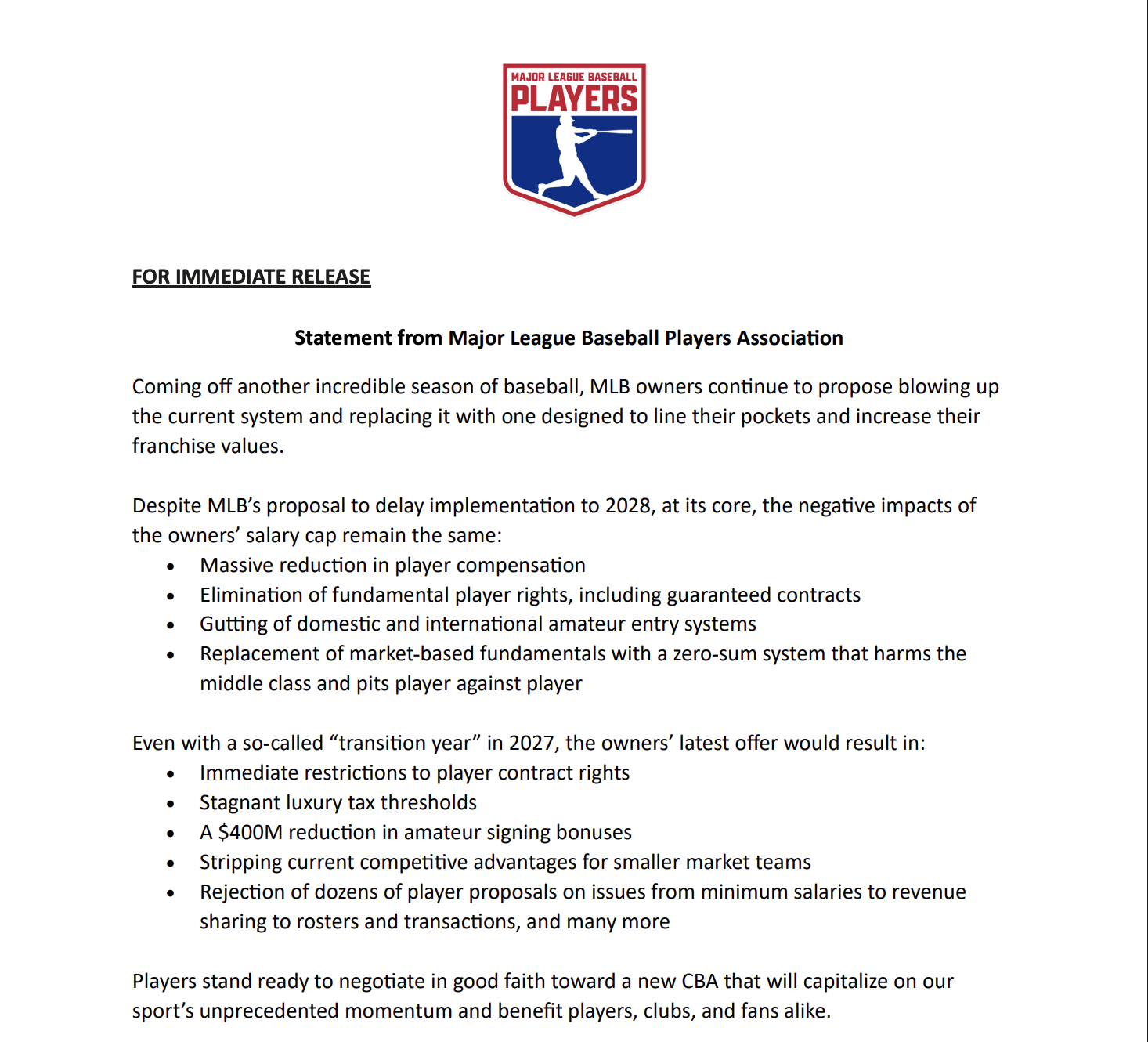
Another caveat to all of this, in the improbable event the Players Union accepts these terms, is that this wouldn't take effect until 2028, giving teams this offseason and all of next season to get within the floor and cap. The Players Union was less than enthused about this proposal:
If this floor and cap were applied to the current payroll for each team, here’s how things would shake out:
Teams under the proposed floor:
- The World Champion Milwaukee Brewers
- The AL pennant winning Tampa Bay Rays
- (Sacramento) Athletics
- Chicago White Sox
- Cincinnati Reds
- Cleveland Guardians
- Colorado Rockies
- Miami Marlins
- Minnesota Twins
- Pittsburgh Pirates
- St. Louis Cardinals
- Washington Nationals
Those 12 teams would have to spend anywhere from $10 million to $106 million and I cannot fathom being Mike Chernoff, General Manager of the Guardians, and seeing that outrageous top end number he’d have to hit.
Now, some of the details around the MLB proposal get tricky. For instance, to be considered within the salary floor, a team technically has to hit a $162.2 million payroll, roughly 90% of the stated floor number. However, over the 2028-2030 period, a team must average $180.2 million spent. So, that $106 million increase Mike Chernoff will have to make up could look more like $86 million, which is only marginally better and still has to be made up in subsequent years
If you’re the Guardians, all you have to do is go out there and sign players to an Aaron Judge level contract and boom you’ve made the difference. The question is, what happens when that caliber of player is not out there and a significant amount of money needs to be made up to reach the floor? We’ll peak at this year’s free agent class later but, I’ll go ahead and spoil part of that by saying, outside of Tarik Skubal, one or two players may hit the $30 million per year threshold, and they may both be overpaid.
And that’s where I think a salary floor, at least initially, will see some scrutiny. $20 million AAV contracts are more commonplace and don’t necessarily go to the really good players anymore. Someone whose OPS is under .700 but has a +9 OAA on defense is making around $20 million, as well as several starters whose ERA hover between 4.00 and 5.00, filling out the middle and back end of rotations. Those players will likely continue to see as hefty or heftier contracts as teams at the bottom of the payroll look to bridge the gaps.
I can begin to see why a top tier pitcher hitting free agency would be worried about a salary cap and how it affects their earnings when, on the outset, it seems many less productive players will benefit from the other end of this deal.
On the flip side, here are the teams that would need to cut back to get under the proposed salary cap:
Teams over the proposed cap:
- New York Mets
- Los Angeles Dodgers
- New York Yankees
- Philadelphia Phillies
- Toronto Blue Jays
- San Diego Padres
- Boston Red Sox
- Chicago Cubs
Pretty easy to have guessed which teams would need to slash payroll, the “big market” teams have always made themselves known. Those over the cap won’t have the same wiggle room going over as those needing to spend to get above the floor, and I think it’s obvious why. If you’re specifically the commissioner of MLB, why lose out on that sweet “luxury tax” money for going over the cap?
Better yet, with teams like the Mets and Dodgers, who have both been paying the luxury tax for five and six seasons in a row respectively, does it matter? Ultimately, the Dodgers are why we’re here and all they’ve shown is that their pockets run deep and they . Will this deter them from continuing to go after Tarik Skubal this offseason or pursuing Drew Rasmussen in 2028 or Ronald Acuna Jr. in 2029? My guess is the Dodgers will continue to be their truest selves. They have a prospect pool that runs deep and as older, expensive contracts come off their books, the payroll will likely get lower just in time for those prospects to grab spots.
With no language surrounding deferred contracts or how TV rights payouts are being distributed throughout the league, MLB’s proposal seems less about pestering the Dodgers to change their highrolling ways and more about policing the bottom third of owners for their tight grip on their checkbooks.
For what it’s worth, I am pro both a salary cap and floor. If you’re wealthy enough, alone or in a group, to own an entire sports franchise, you should be ready to invest and support the organization. Of those 12 teams under the theoretical floor, four of them made the playoffs and a weak American League helped at least one of those teams. For three of those teams, they haven’t made the playoffs in the 20s yet and we’re closing in on the end of this decade.
On the other hand, I am almost tired of the argument that money, both the having a lot of it and the spending of a lot of it, doesn’t bring a certain level of success in this sport. Since the expanded playoffs began in 2022, 63% of the playoff teams came from the top half of the league payroll from their respective years. Not an overwhelming number by any means but, basically, two of every three teams who made the playoffs. And really, the teams in the bottom half who make the postseason consistently like the Brewers, Rays, Guardians, all are known to have stellar internal infrastructures that produce steady results.
Is the answer here just to ‘get good,’ as our World Series competitors prove can work almost year in and year out? I want it to be — the Brewers and Rays style and approach to baseball is a lot of fun to watch and has given their teams a chance to win it all for several years now, finally being able to do so this year. Realistically, on the field, the goal is to win the World Series and outside of the 2017 asterisk Astros and this year’s magical Brewers, that goes to the team that spends more money than most can or are willing to.
All images provided by MLB
Free agency has begun and while we wait for the inevitable day of December 2nd to put all of this to halt, one fairly obvious move has been made and teams plans for how they’ll operate this offseason are coming to light but let’s start with FanGraphs top 10 free agents:
1) Tarik Skubal, SP
2) Seiya Suzuki, OF
3) Trevor Rogers, SP
4) Michael King, SP
5) Teruaki Sato, 3B/RF
6) Freddy Peralta, SP
7) Jazz Chisholm Jr., 2B
8) Adrian Morejon, RP
9) Kris Bubic, SP
10) Randy Arozarena, OF
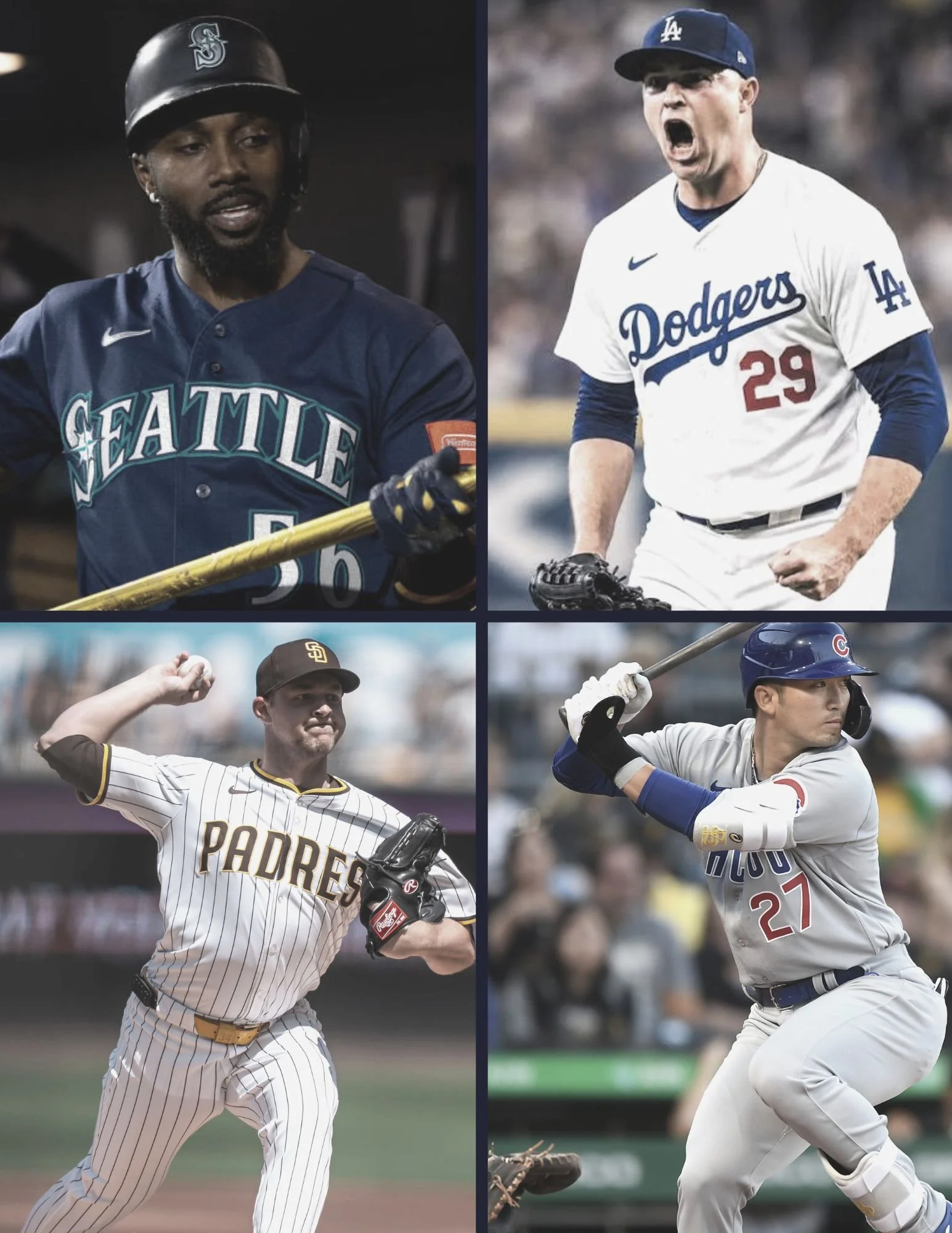
The first thing that pops out to me is the obvious. No matter which top free agent list you look at, the drop off from one to two is big. No disrespect to Suzuki, or anyone at the two spot, but Tarik Skubal is the crown jewel of this class as a multiple Cy Young Award winner. He will be the talk of the town and according to Jeff Passan, Skubal will be pushing to sign before the lockout takes place by the end of December 1st. The Dodgers are a clear frontrunner to bring Skubal back but analysts and non-analysts alike are giving the Mets, and their fans, a lot of hope that owner, Steve Cohen will throw as much money as it takes to land the southpaw from Hayward, California. Even his former team, the Detroit Tigers, are sneakily involved in the discussion and Skubal has been on record saying he’d love to return.
Outside of the number one spot, there are many difference makers. Seiya Suzuki has been consistent as a top of the order bat, averaging 141 games, 25 home runs and 84 runs batted in since 2023. He’ll be 32 on opening day, so a long contract is unlikely. The Cubs will be looking to get him back and keep as much of their core together as they can but teams like the Blue Jays and Red Sox will be looking to add a bat. I also wouldn’t count out the Texas Rangers, who have been known to make big splashes sporadically and are in need of a big bat. Randy Arozarena’s market will be similar but I imagine he’s signed after Suzuki signs. He provides a similar production at the plate, just not as consistently as Suzuki has been and he’s certainly not the better defender.
Starting pitching will also be at the forefront of this free agency, though outside of Skubal, there may be more questions than definitive answers. I believe Michael King is the 2nd best pitcher available, above Trevor Rogers. King has been great in San Diego, flourishing in his transition to a full-time starter with an ERA of 3.15, a little more than a strikeout per inning and an ERA+ that has him at 31% better than the average pitcher. Both King and Rogers spent time on the injured list in 2025 but King bounced back much better. Rogers, pre the right knee injury, looked like he might turn into an ace for Baltimore but he’s been unable to regain that form since. He can still be a viable number two in a rotation and he’ll be 29 on opening day, so there is still time to see if he can make that next step forward. Freddy Peralta will also be a hot commodity this offseason but I am sure there will be trepidation in finding out which Peralta a team will be signing, the sub-5 ERA mess or the refined pitcher we saw dominate baseball the last two months of the regular season and postseason.
Bo stays put in Queens
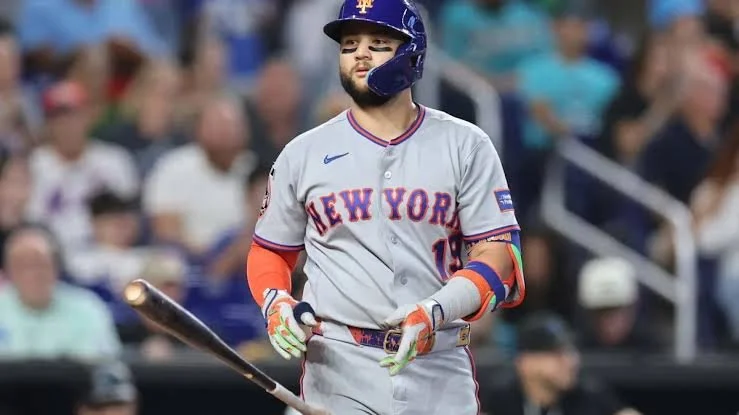
Bo Bichette has opted into the 2nd year of his contract with the New York Mets. This was an obvious move. Bichette is set to make $42 million this season, a number he was undoubtedly not going to come closer to finding on the open market had he opted out.
His first season for the Metropolitans did not exactly go the way he wanted. The first 59 games he looked lost at the plate, grounding out 53% of his at-bats and in the field, he took on a new position at third that he was both unfamiliar and uncomfortable with. From June on, Bichette’s bat was better, and just that. The remaining 102 games saw a player finding his footing, producing a .284/.333/.439/.772 slash line.
I’ll take more of those 2nd half productive lines over what we saw before that but I think both Bichette and the Mets know this isn’t $42 million a year production. He was the desperate splash in last offseason’s overhaul and rebranding of Mets baseball, benefitting from the rapid losses of Brandon Nimmo, Edwin Diaz and Pete Alonso in succession. Nonetheless, I expect a much better season from the hot corner in 2027.
Is the next fire sale coming this offseason?
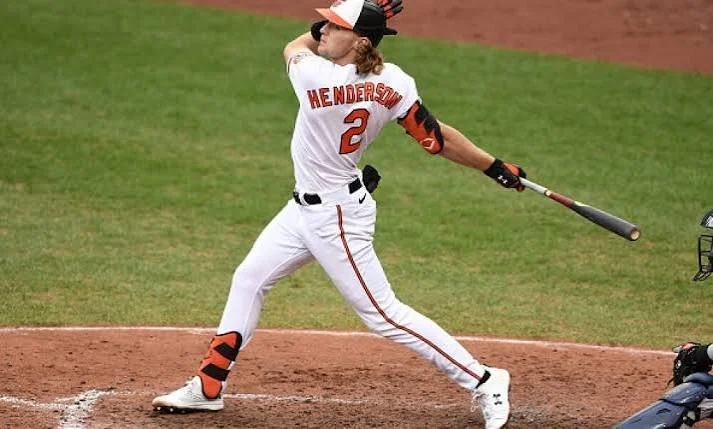
According to Andy Kostka of The Baltimore Banner, the Baltimore Orioles are making everyone except Pete Alonso available for trades.
If we take that at face value, that means Gunnar Henderson, Jackson Holliday, Samuel Basallo are all on the market. Three players who were meant to be cornerstones, building blocks to the next era of Baltimore playoff baseball, all under the age of 25.
What exactly has gone wrong for a team that had aspirations of making their first World Series appearance since the Reagan administration? If you hop back to 2022 with me again, you’ll find an Orioles team that had its first winning season in six years with both Henderson and Kyle Stowers debuting for them. 2023 was the breakout year, their first 100 win season in 43 years, Henderson winning Rookie of the Year honors and it all led to them being swept out of the ALDS by the eventual championship winning Texas Rangers.
They were poised in 2024 to build momentum off of their successful 2023, gambling in a trade for Corbin Burnes to be their ace in a contract year for him but it set the tone that Baltimore was improving to make a real run for the World Series. By season’s end, they weren’t as good as they were, making the Wild Card instead of winning the division but Burnes had pitched like the ace advertised, Grayson Rodriguez, their first round pick back in 2018, was contributing like a future ace and Henderson placed top four in AL MVP voting that year and another top prospect in Jackson Holliday had debuted, providing more hope that the tide would turn. All was looking up — that is until they were swept out of the playoffs for a second straight year, this time in the Wild Card series by the Kansas City Royals.
Things have nosedived since. Back-to-back losing seasons in ‘25 and ‘26 and much of the team mentioned fall into the two categories of either having been traded or not providing the production most thought they would. Henderson hasn’t been able to get back to his ‘23-’24 swing, Holliday hasn’t been much better than a replacement player and Adley Rutschman, once considered a franchise player, was shipped off to Boston to make way for Samuel Basallo to take that mantle and only show flashes of greatness over his first 143 games.
To be fair to both Holliday and Basallo, they’ll be 23 years old on opening day this year. It’s a lot of pressure to put on both of their shoulders this early into their careers, especially for the former, carrying the last name of a great ex-player.
A good portion of the blame will lie with the players who’ve under performed but much of the blame may also rest with former GM, Mike Elias. Serving in that role from 2018 through the end of this season, Elias draft and trade history are spotty. Drafting all of the players mentioned above, we saw sparks of success from many of them but nothing sustainable.
The O’s have always had a hard time attracting free agent pitchers; Camden Yards has, more or less, been known as a hitter's park, so Elias relied on getting top of the line pitching in the trade market. In the trade for Corbin Burnes, the Brewers acquired DL Hall and Joey Ortiz, two contributing pieces to their World Series run this year, all for one year of Burnes. Right before the 2024 trade deadline, Elias traded for Marlins starter Trevor Rogers to sit atop the rotation, giving Miami Kyle Stowers and Connor Norby. The former became an all-star and building block for a young, hungry team. Rogers is a free agent this year and likely not heading back to Baltimore. Grayson Rodriguez was supposed to be a future ace of their staff but after three seasons, one of which was spent on the injured list, he landed out in Anaheim. Nolan McLean, the future ace of Mets baseball, was drafted in 2022 and subsequently not signed due to issues arising in his physical. And I can’t move on without mentioning another first round pick back in 2020, Heston Kjerstad, who was just released from the team earlier this week.
We’ll see how serious the Orioles and new GM, Jared Banner, are about gutting this team and where exactly that takes them. Given the upside of youth their trade block now has, trade packages should be bountiful but it seems unfathomable that this team would be going through another rebuild so soon.
Rangers looking to unload
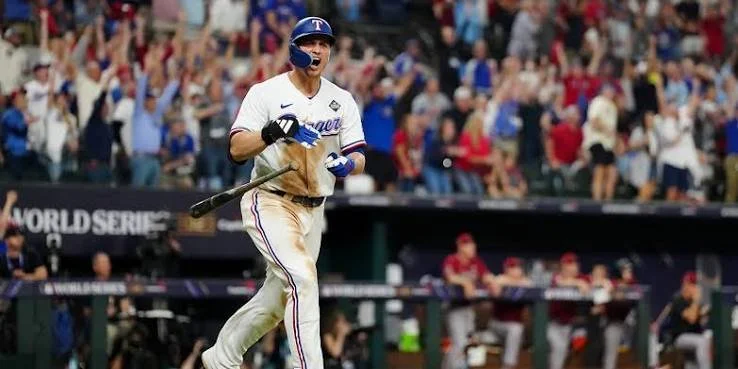
Alongside news of the Orioles potentially retooling came the Texas Rangers with similar ideas; Not a full retool but looking to become a little less top heavy in their books.
Evan Grant of The Dallas Morning News reported that the Rangers are open to moving Corey Seager, Jacob deGrom and Nathan Eovaldi, set to collectively make $94 million next season.
If it isn’t apparent, that’s a lot of money and is around half of what the Rangers payroll totaled in 2026 and likely in 2027. That alone will make a trade for any one of those pieces difficult but there are even trickier elements to this. Each of them holds a no-trade clause in their contract, something deGrom used at this past season’s trade deadline to veto a trade to Atlanta.
For Seager, he’s entering his sixth season with the Rangers, which would match his time with the Dodgers and has been bitten by the injury bug in all of the past four seasons. Once that trend starts it rarely stops, no less that he still has five seasons and $155 million left on his contract. Offensively, he’s still producing very good to elite exit velocity, hard hit rates and barrel rates and thus when he misses 40-50 games a year, it has a big effect on the Rangers.
deGrom and Eovaldi have similar stories. The former has put together two healthy seasons where he pitched 30 and 31 starts and showed he still has a lot left in the tank. It may not be at the best pitcher in baseball level he once was but, outside of some poor second half starts this season, he’s still a great top of the rotation piece who can still hit eleven K/9 in a full season. His health issues will always follow him around and any trade partner will assess that in any trade talk. Unlike deGrom, Eovaldi hasn’t been able to remotely shake injuries off, spending time on the injured list in each of the last four seasons, mostly due to issues with his throwing elbow. He’s just two seasons removed from almost having one of the best pitching years a 35 year old has ever had and his playoff acumen precedes him. There’s upside to Nathan Eovaldi when he’s healthy. He’ll be their easier piece to move as he’s in a free agent year and will be owed less than the other two at $20 million this upcoming season.
With a reported $20 million available to spend in free agency for the Rangers, moving one or more of these players could just be the domino effect to landing the big, left-handed game changer or the multiple good pieces they’ll need to get back atop the AL West.
Contemporary Baseball era 2027 Hall of Fame ballot announced
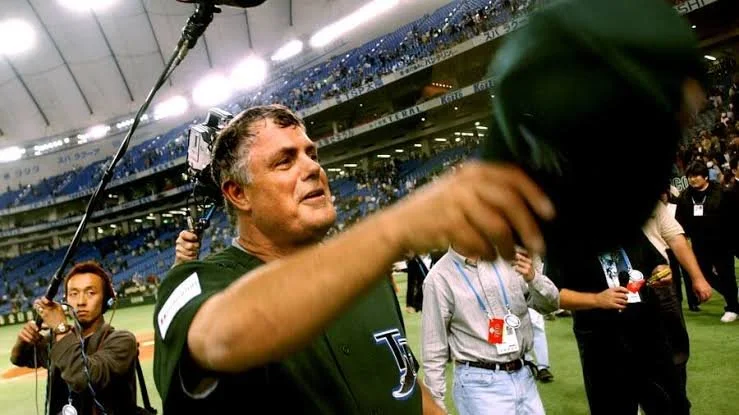
Earlier this week, The National Baseball Hall of Fame announced the names on this year’s Contemporary Baseball era (1980 to present) ballot for the managers, umpire and executives seeking induction in 2027. The ballot includes:
- Sandy Alderson (Executive: GM, CEO and President)
- Dusty Baker (Manager)
- Bruce Bochy (Manager)
- Joe Maddon (Manager)
- Lou Pinella (Manager)
- Brian Sabean (Executive)
- Ted Turner (Owner, Manager for one game)
- Bill White (President of National League, Broadcaster)
A panel consisting of 16 members spanning Hall of Fame players, current executives, members of the media and historians will vote on those candidates. We’ll find out on Dec. 6 whether any of them will receive the 75% required for induction.
Defensive Award recipients
All images provided by MLB
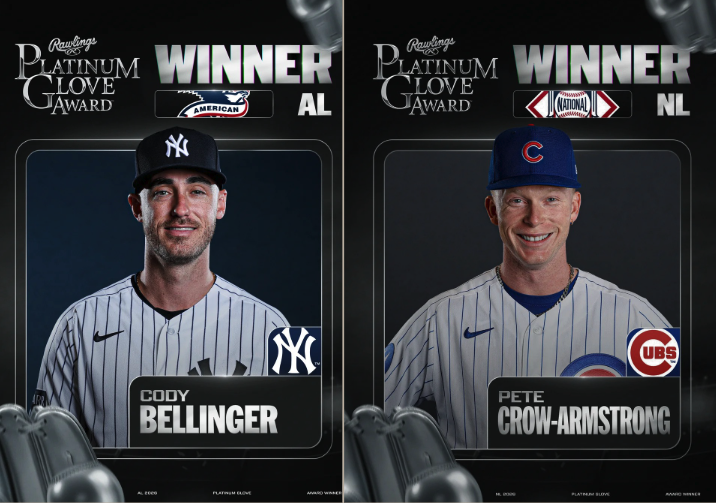
I love providing a weekly How could you not be romantic about Baseball moment, it’s always good to err on the side of positivity. I predict it will be a touch more difficult to provide those in the offseason, especially this one. So, instead, let’s honor some award winners, including a bunch of first-time award winners! Here are the 2026 Gold Glove winners:
American League:
C: Dillon Dingler, Tigers (2)
1B: Christian Walker, Astros (3)
2B: Cole Young, Mariners (1)
SS: Taylor Walls, Rays (1)
3B: Caleb Durbin, Red Sox (1)
LF: Cody Bellinger, Yankees (2; Platinum Glove)
CF: Ceddanne Rafaela, Red Sox (2)
RF: Wilyer Abreu, Red Sox (3)
P: Tanner Bibee, Guardians (1)
UT: Ezequiel Duran, Rangers (1)
National League:
C: Gabriel Moreno, Diamondbacks (2)
1B: Matt Olson, Braves (4)
2B: Brice Turang (2)
SS: Geraldo Perdomo, Diamondbacks (1)
3B: Alex Bregman, Cubs (2)
LF: Jackson Chourio, Brewers (1)
CF: Pete Crow-Armstrong, Cubs (2; Platinum Glove)
RF: Corbin Carroll, Diamondbacks (1)
P: Nolan McLean, Mets (1)
UT: Mauricio Dubón, Braves (3)
Congratulations to them all, even if defensive awards aren’t perfect metrics for the actual best defender at the position, but especially to the first-timers!
Biggest shout-out goes to Nolan McLean for his first MLB award!!!